
If you’ve been dealing with tension headaches that just won’t quit, you’re not alone. So many people in Hilliard, OH reach a point where they’ve tried everything — ibuprofen, more sleep, cutting back on coffee — and yet those headaches keep coming back. The frustrating truth is that stress often gets blamed as the sole culprit, but stress is really only part of the story. The other part? It’s often hiding in your neck and upper spine, and it doesn’t go away on its own without the right care.
At 614 Chiropractic in Hilliard, OH, Dr. Nicholas Esser works with patients every week who have been living with recurring tension headaches for months, sometimes even years, without ever addressing the underlying physical causes. This article is designed to help you understand what’s really driving those headaches, why they’re so persistent, and what your options are for finding lasting relief through conservative, non-invasive care.
What Are Tension Headaches, Exactly?
Tension headaches are the most common type of headache, typically described as a dull, aching pressure or tightness around the forehead, temples, or back of the head and neck. Unlike migraines, they usually don’t come with nausea or visual disturbances, but they can be just as disabling when they’re happening day after day. They’re often dismissed as “just stress headaches,” which means the structural causes — like muscle tension in the neck, poor posture, or spinal misalignment — frequently go unaddressed.
Why Blaming Only Stress Isn’t Enough
Stress absolutely plays a role in tension headaches. When you’re anxious, overwhelmed, or fatigued, your body responds by tensing up, especially around the shoulders, neck, and jaw. But here’s the thing: stress is rarely the only driver. For a lot of people, stress is simply the trigger that activates an underlying structural problem that was already there waiting.
Think of it like a strained muscle in your back. Bending over to pick something up might cause it to spasm, but the real issue is the existing weakness or injury, not the act of bending over. Tension headaches work in a similar way. If your cervical spine (the bones in your neck) is misaligned, if your suboccipital muscles are chronically tight, or if there’s nerve irritation in your upper neck, even a small amount of stress can set off a headache that lasts for days.
This is why managing stress alone — through meditation, better sleep, or cutting out caffeine — helps some people feel better temporarily, but the headaches always seem to return. Without addressing the physical foundation, you’re only managing symptoms, not solving the actual problem.
The Neck-Headache Connection Most People Miss
The relationship between your neck and your headaches is one of the most underappreciated connections in musculoskeletal health. The upper cervical spine — specifically the C1 and C2 vertebrae — is in very close proximity to the brainstem and several major nerves that travel up into the head. When these vertebrae are even slightly misaligned or when the surrounding muscles are in a constant state of tension, it can create referred pain that radiates right into your head.
This phenomenon is sometimes called a cervicogenic headache, meaning the headache originates from the cervical spine rather than from inside the head itself. Cervicogenic headaches are often mistaken for tension headaches or even migraines, and research in the conservative care field has consistently pointed to the neck as a primary source of chronic, recurring headache pain.
The muscles at the base of the skull — the suboccipital muscles — are particularly important here. When they’re chronically tight due to poor posture, forward head positioning, or spinal dysfunction, they can compress nerves and restrict blood flow in ways that contribute directly to headache frequency and intensity. Dr. Nicholas Esser often identifies this type of muscular and joint dysfunction in patients who come to 614 Chiropractic in Hilliard, OH wondering why their headaches never fully resolve.
How Posture and Daily Habits Make It Worse
Here in Hilliard, OH, like everywhere else, most of us spend the majority of our day in a seated position. We’re working at desks, looking at screens, commuting, and scrolling through phones. All of these activities encourage what’s known as forward head posture, where your head drifts forward relative to your shoulders. For every inch your head shifts forward, the effective weight on your cervical spine increases dramatically.
Your head weighs approximately 10 to 12 pounds in a neutral position. With forward head posture, the strain your neck muscles must bear can increase by 20 to 30 pounds or more. Over time, this creates chronic muscle overload, joint stress, and nerve irritation — all of which contribute to tension headaches. The muscles are essentially working overtime just to hold your head up, and when they finally fatigue, a headache is often the result.
Other habits that contribute to this cycle include sleeping on your stomach, cradling your phone between your ear and shoulder, carrying heavy bags on one side, and working in poorly set up ergonomic environments. These might seem like small things individually, but over months and years, they compound into real structural problems that fuel persistent headaches.
How Chiropractic Care Can Help
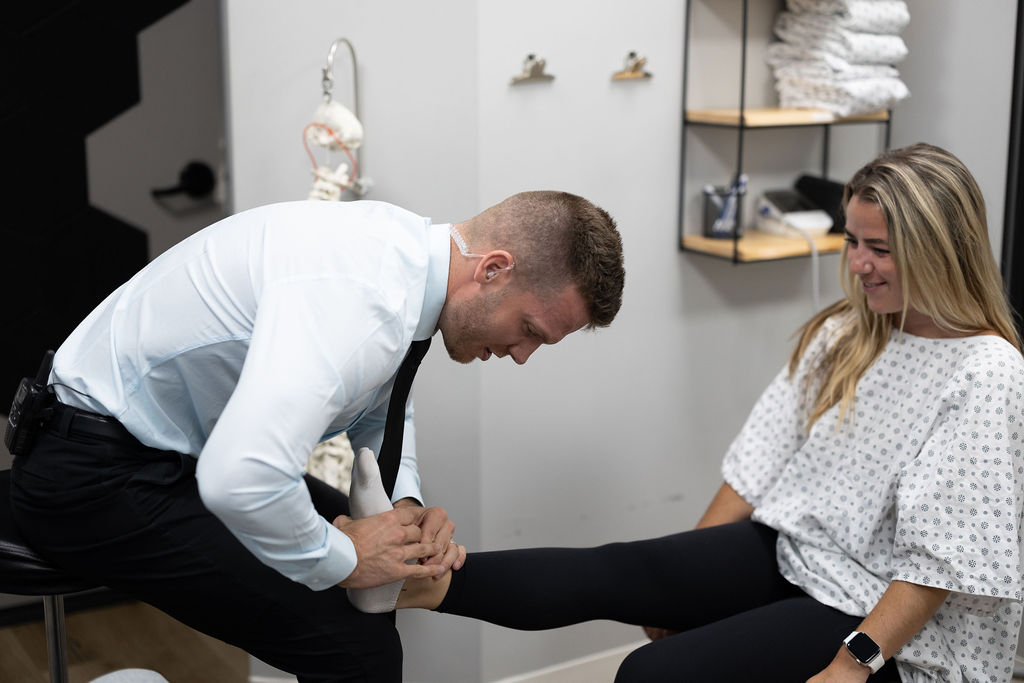
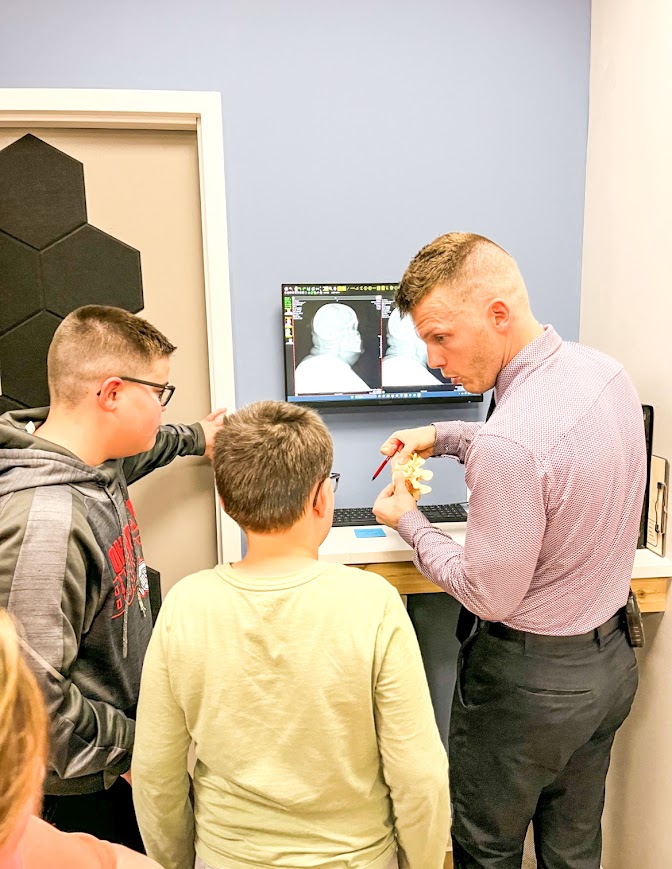
Chiropractic care offers a non-invasive, drug-free approach to addressing the physical causes of tension headaches. Rather than masking symptoms with medication, the focus is on identifying and correcting the underlying structural issues that are contributing to your pain. At 614 Chiropractic in Hilliard, OH, Dr. Nicholas Esser takes a thorough, individualized approach to evaluating each patient because no two cases of tension headaches look exactly alike.
Chiropractic adjustments to the cervical spine can help restore proper joint motion, reduce nerve irritation, and relieve muscular tension in the neck and upper back. The American Chiropractic Association and a growing body of evidence from organizations like the Cochrane Library have indicated that spinal manipulation may be an effective option for managing tension-type headaches, particularly those with a cervicogenic component. The goal isn’t just to get you feeling better today; it’s to help you build a healthier foundation so headaches become less frequent over time.
Beyond adjustments, care at 614 Chiropractic often incorporates targeted soft tissue techniques to address the muscular component of headache pain. The suboccipital muscles, the trapezius, and the levator scapulae are frequently involved, and addressing them alongside spinal alignment can make a meaningful difference in how quickly and how completely patients respond to care.
SoftWave Tissue Regeneration for Neck and Headache Relief
One of the most exciting tools available at 614 Chiropractic is SoftWave Tissue Regeneration Therapy. This is a cutting-edge, non-invasive treatment that uses electrohydraulic supersonic acoustic waves to stimulate the body’s natural healing response at a cellular level. For patients dealing with chronic neck pain, soft tissue damage from whiplash, or deeply rooted muscular tension that contributes to recurring headaches, SoftWave can reach areas that hands-on treatment alone may not fully address.
SoftWave therapy works by signaling the body to increase blood flow, reduce inflammation, and activate stem cell recruitment in damaged or chronically stressed tissues. For neck pain and whiplash-related injuries specifically, this matters a great deal. Whiplash — whether from a car accident, a sports injury, or even a sudden movement — can leave behind scar tissue and chronic inflammation that disrupts normal muscle and joint function for years. That ongoing dysfunction in the neck is frequently a hidden contributor to persistent tension headaches.
What makes SoftWave particularly valuable is that it addresses the tissue-level damage that other treatments may overlook. Adjustments correct joint alignment. SoftWave helps heal the tissue itself. When combined as part of a comprehensive care plan under Dr. Nicholas Esser’s guidance, these approaches work together to produce results that neither could achieve as effectively alone. Patients often report a noticeable reduction in neck tension and headache frequency after incorporating SoftWave into their care.
Spinal Decompression: Addressing Disc Issues at the Root
Not all persistent tension headaches are purely muscular or postural in origin. Sometimes, disc problems in the cervical spine play a significant role. The discs between your cervical vertebrae act as cushions and shock absorbers. When they become compressed, herniated, or degenerated, they can press on nerve roots and create a cascade of symptoms, including neck pain, radiating arm pain, and chronic headaches that seem to respond to nothing.
Spinal decompression therapy is a gentle, non-surgical treatment that creates negative pressure within the disc space, encouraging bulging or herniated disc material to retract and allowing nutrient-rich fluid to flow back into the disc. This process supports the disc’s natural ability to heal and can significantly reduce the nerve pressure that’s contributing to both neck pain and headache symptoms. At 614 Chiropractic in Hilliard, OH, decompression therapy is used for patients whose symptoms suggest a disc component that goes beyond what adjustments alone can address.
Decompression is particularly relevant for patients who have been told they may need surgery, or for those who have tried traditional chiropractic care without getting the full relief they were hoping for. It’s also highly effective for conditions like cervical disc herniation and degenerative disc disease in the neck, both of which can manifest as persistent, treatment-resistant tension-like headaches. Dr. Nicholas Esser evaluates each patient carefully to determine whether decompression is a good fit, ensuring the right tools are matched to the right problem.
Practical Tips to Reduce Tension Headaches at Home
While professional care is the most effective path forward for persistent tension headaches, there are things you can do at home to support your recovery and reduce flare-ups. These suggestions are meant to complement — not replace — the care you receive from a qualified professional.
One of the most impactful changes you can make is improving your workstation setup. Your monitor should be at eye level so you’re not looking down, your chair should support the natural curve of your lower back, and your keyboard should allow your shoulders to stay relaxed. Even small ergonomic adjustments can dramatically reduce the strain your neck experiences throughout the day.
Taking regular movement breaks is equally important. If you’re sitting for long stretches, getting up every 30 to 45 minutes to walk around, roll your shoulders, and gently move your neck through its natural range of motion can keep tension from building up. Staying hydrated throughout the day, maintaining a consistent sleep schedule, and avoiding sleeping on your stomach can also support better cervical alignment and reduce morning headaches.
When to See a Chiropractor for Tension Headaches
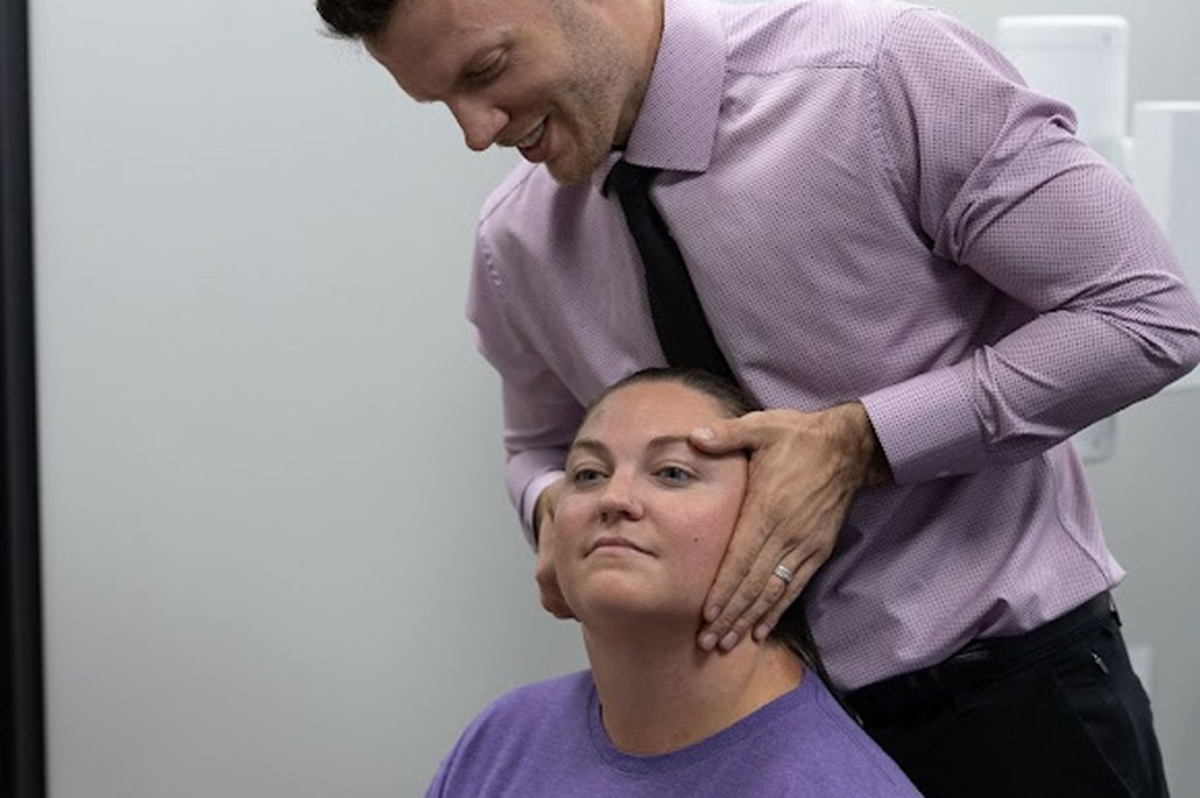
If your tension headaches are happening more than a few times per month, lasting longer than a day, or not responding to typical over-the-counter remedies, those are signs that there may be a structural component worth evaluating. Chiropractic care is especially worth considering if your headaches are accompanied by neck stiffness or pain, if they seem to start at the base of your skull, or if they tend to worsen after long periods of sitting or screen time.
There are also certain symptoms that should prompt you to seek immediate medical evaluation rather than waiting for a chiropractic appointment. These include a sudden, severe headache unlike any you’ve had before, a headache accompanied by vision changes, confusion, numbness, or weakness, and any headache that follows a head injury. These could be signs of a more serious condition that requires urgent medical attention.
For the vast majority of people dealing with chronic tension headaches, though, the issue is musculoskeletal in nature, and conservative care through chiropractic treatment — potentially combined with SoftWave therapy or decompression — offers a safe and effective path forward.
Tension Headache Triggers vs. What’s Actually Going On Underneath
Perceived Trigger | What It Often Reveals | How It Can Be Addressed |
|---|---|---|
Stress or anxiety | Pre-existing cervical joint dysfunction or muscle tension that stress activates | Chiropractic adjustments, soft tissue therapy |
Long hours at a desk | Forward head posture, chronic suboccipital muscle overload | Postural correction, ergonomic changes, decompression |
Poor sleep position | Cervical misalignment contributing to morning headaches | Chiropractic care, pillow and sleep position guidance |
Previous whiplash or neck injury | Scar tissue, chronic inflammation, soft tissue damage in cervical structures | SoftWave tissue regeneration therapy |
Recurring neck stiffness | Possible cervical disc compression or herniation | Spinal decompression therapy |
Jaw clenching or grinding | TMJ dysfunction linked to upper cervical tension | Chiropractic evaluation, cervical soft tissue work |
Myths vs. Facts About Tension Headaches
Myth: Tension headaches are purely a stress problem and don’t need physical treatment.
Fact: While stress can trigger tension headaches, the underlying cause is often structural — involving the cervical spine, muscles, and nerves of the neck. Addressing only the emotional or lifestyle component while ignoring the physical one is why so many people struggle with recurring headaches that never fully resolve.
Myth: Taking pain relievers regularly is a safe long-term solution for frequent headaches.
Fact: Overusing over-the-counter pain medications can actually lead to what’s known as medication overuse headache (sometimes called rebound headache), where the headaches become more frequent the more you rely on medication. Conservative care that addresses the root cause is a much more sustainable approach.
Myth: If imaging or scans come back normal, nothing is physically wrong.
Fact: Standard imaging doesn’t always capture muscle tension, joint restriction, or minor cervical alignment issues that can drive significant headache pain. A normal MRI or X-ray doesn’t mean your neck isn’t contributing to your symptoms; it simply means certain conditions have been ruled out.
Myth: Chiropractic adjustments for the neck are dangerous.
Fact: Cervical chiropractic adjustments, when performed by a trained and licensed chiropractor, are considered a low-risk intervention for appropriate candidates. Research from organizations like the WHO and Cochrane Library supports the use of spinal manipulation as part of conservative headache and neck pain management.
Myth: If headaches have been going on for years, there’s nothing that can be done.
Fact: Chronic, long-standing tension headaches can absolutely respond to the right combination of care. In many cases, patients who have struggled for years find meaningful relief once the structural causes are properly identified and treated with tools like chiropractic care, SoftWave therapy, and spinal decompression.
Final Thoughts From 614 Chiropractic in Hilliard, OH
Tension headaches don’t have to be a permanent feature of your life. If you’ve been managing them with ibuprofen, hoping they’ll eventually go away on their own, or assuming stress is just something you have to live with, it may be time to take a closer look at what’s happening in your neck and spine. In many cases, that’s where the real answers are hiding.
At 614 Chiropractic in Hilliard, OH, Dr. Nicholas Esser is committed to helping patients in our community understand the root causes of their pain, not just the symptoms on the surface. Whether the solution is chiropractic adjustments to restore proper cervical alignment, SoftWave tissue regeneration therapy to address soft tissue damage and chronic inflammation, or spinal decompression to take pressure off cervical discs and nerve roots, there are real, evidence-informed tools available to you right here in Hilliard.
You deserve to feel like yourself again. Reaching out for a thorough evaluation is the first step toward understanding what’s actually driving your headaches and building a plan that addresses it from the ground up.
Frequently Asked Questions
Can chiropractic care actually help with tension headaches?
Yes. Evidence from organizations like the Cochrane Library and the American Chiropractic Association supports chiropractic care — including spinal manipulation and cervical adjustments — as part of an effective conservative approach to managing tension-type and cervicogenic headaches. Results vary based on the underlying cause and individual response to care.
How long does it take to see improvement in headache frequency with chiropractic care?
Every patient is different, but many people notice improvement within the first several weeks of consistent care. Those with long-standing structural issues or disc involvement may require more time and a multi-modal approach that includes decompression or SoftWave therapy alongside adjustments.
What is SoftWave therapy and how does it help with neck pain?
SoftWave Tissue Regeneration Therapy uses acoustic waves to stimulate your body’s natural healing processes at a cellular level, reducing inflammation and promoting tissue repair. It’s particularly helpful for patients with chronic neck pain, whiplash injuries, or soft tissue damage that may be contributing to recurring tension headaches.
Is spinal decompression safe for neck-related headaches?
Spinal decompression is a gentle, non-surgical therapy that is generally considered safe when performed on appropriate candidates. Dr. Nicholas Esser evaluates each patient individually to determine whether decompression is a suitable option based on their symptoms, history, and any available imaging.
What’s the difference between a tension headache and a cervicogenic headache?
A tension headache is a broad category of headache often associated with stress and muscle tension. A cervicogenic headache specifically originates from structures in the cervical spine and neck. In practice, the two overlap significantly, and both often benefit from care that addresses the neck as a primary contributing factor.
Should I see a chiropractor or a medical doctor first for my tension headaches?
If you’ve already ruled out serious medical causes and your headaches are recurring and musculoskeletal in nature, a chiropractic evaluation is a very reasonable first step. If you’re experiencing any red flag symptoms — like sudden severe headache, neurological changes, or post-injury headaches — seek medical care first.
TL;DR — Key Takeaways
Tension headaches are rarely caused by stress alone. Underlying neck and spinal issues are frequently a major, overlooked contributor.
Forward head posture, cervical misalignment, and muscular dysfunction in the neck can all drive chronic, recurring headaches.
Chiropractic adjustments, SoftWave tissue regeneration therapy, and spinal decompression each target different layers of the problem from joint alignment to soft tissue healing to disc pressure.
At 614 Chiropractic in Hilliard, OH, Dr. Nicholas Esser takes an individualized, root-cause approach to headache care that goes beyond symptom management.
If your tension headaches keep coming back despite your best efforts, a thorough chiropractic evaluation could reveal what’s actually been driving them all along.