
If you’re a runner in central Ohio, you already know that knee pain can stop your training in its tracks. Whether you’re logging miles on the Hilliard trails, racing a local 5K, or training for the Columbus Marathon, knee discomfort is one of the most common complaints that brings runners into our office. The good news? In most cases, knee pain in runners is very treatable — and understanding why it happens is the first step toward getting back on the road.
At 614 Chiropractic in Hilliard, Ohio, Dr. Nicholas Esser works with runners of all levels who are frustrated, sidelined, or just trying to stay ahead of a nagging injury. This article is designed to help you understand what’s going on with your knees, what might be contributing to the problem, and what your options are for conservative, non-invasive care.
What Is Runner’s Knee?
Runner’s knee is a general term used to describe pain around or behind the kneecap (patella) that develops from repetitive stress during running. The most common form is called patellofemoral pain syndrome (PFPS). It’s not a single injury — it’s a pattern of overuse and biomechanical stress that causes the structures around the knee joint to become irritated and inflamed. In short: your knee is working harder than it should, and it’s letting you know.
- Why Runners in Ohio Are Especially Prone to Knee Pain
- Common Causes of Knee Pain in Runners
- Signs and Symptoms to Watch For
- How Chiropractic Care Can Help
- Practical Tips to Protect Your Knees
- When to See a Chiropractor
- Myths vs. Facts About Runner’s Knee
- Final Thoughts From 614 Chiropractic
- Frequently Asked Questions
Why Runners in Ohio Are Especially Prone to Knee Pain
Ohio runners face a unique combination of conditions that make knee pain particularly common. Our terrain varies — from flat suburban sidewalks in Hilliard to hillier routes near Scioto Audubon and beyond. The seasons bring hard-packed frozen ground in the winter, rain-softened paths in the spring, and intense heat in the summer. All of these variables change the way your feet strike the ground and how your joints absorb impact.
On top of that, central Ohio has a thriving running community. The Columbus Marathon, Pelotonia training routes, and dozens of local 5Ks mean that many runners here are training year-round. That enthusiasm is wonderful — but it also means many runners push through early warning signs rather than addressing them. By the time someone visits 614 Chiropractic in Hilliard, their knee issue has often been building for weeks or months.
Training errors are also a major factor. Ohio runners often ramp up mileage too quickly in the spring after a less active winter, which is a classic setup for overuse injuries. The combination of seasonal training shifts, variable terrain, and high local running participation makes knee pain a very familiar story here in Hilliard and throughout the Columbus area.
Common Causes of Knee Pain in Runners
Knee pain in runners rarely comes from a single dramatic moment. More often, it builds gradually due to a combination of biomechanical and training-related factors. Understanding the root causes helps explain why simply resting for a few days often isn’t enough to solve the problem.
Patellofemoral Pain Syndrome (PFPS) is the most frequently seen culprit. This occurs when the kneecap doesn’t track properly in its groove during movement. When the muscles around the hip and thigh are imbalanced or weak, the patella can shift slightly off course with every stride. Over thousands of steps, that small misalignment creates significant irritation.
Iliotibial (IT) Band Syndrome is another very common diagnosis among runners. The IT band is a thick band of connective tissue running along the outer thigh from the hip to just below the knee. When it becomes tight or inflamed, it creates a sharp or burning pain on the outer side of the knee. Long-distance runners and those who train on banked roads or repeatedly run the same loop in one direction are particularly susceptible.
Patellar tendinopathy, sometimes called jumper’s knee, involves irritation of the tendon just below the kneecap. Runners who also play basketball, soccer, or other jumping sports — and there are plenty in the Columbus area — are at higher risk. Biomechanical issues such as overpronation of the foot, hip weakness, and poor core stability are often at the root of multiple types of runner’s knee. These are patterns Dr. Nicholas Esser commonly identifies and addresses at 614 Chiropractic.
Signs and Symptoms to Watch For
Not all knee pain looks the same, and the location and timing of your discomfort can tell a lot about what’s going on. Pain at the front of the knee or around the kneecap that worsens when going up or down stairs is a hallmark of patellofemoral syndrome. You may also notice a dull ache after sitting for long periods — sometimes called the “theater sign” — where your knee stiffens and aches when you’ve been seated for a while and then stand up.
Pain on the outer side of the knee that tends to flare up around the 2-mile mark of a run and then intensifies is a classic indicator of IT band syndrome. In contrast, patellar tendinopathy usually presents as pain directly below the kneecap, often worse at the beginning of a run and then again after you stop and cool down.
Swelling, warmth, or instability in the knee are more significant signs that warrant prompt evaluation. These symptoms may indicate involvement of the joint itself rather than just the surrounding soft tissue, and that’s when a thorough assessment — like the kind Dr. Nicholas Esser provides at 614 Chiropractic in Hilliard — becomes especially important to rule out anything more serious and develop the right care plan.
How Chiropractic Care Can Help
Many runners are surprised to learn that chiropractic care can play a meaningful role in addressing knee pain. Chiropractic isn’t just about the spine — it’s about how all the joints, muscles, and connective tissues of the body work together as a system. When one part of the kinetic chain is out of balance, the effects travel upstream and downstream. That’s often exactly what’s happening with runner’s knee.
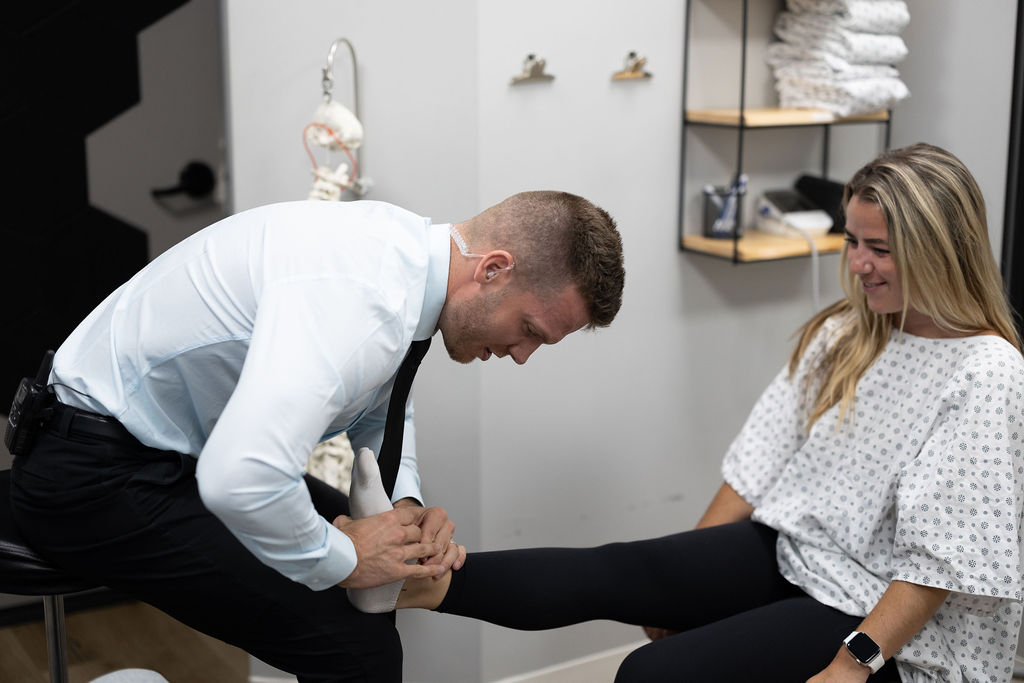
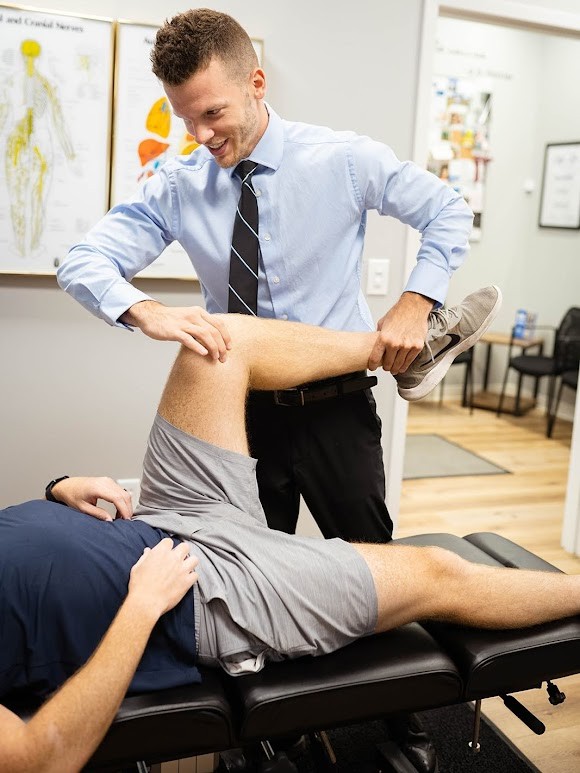
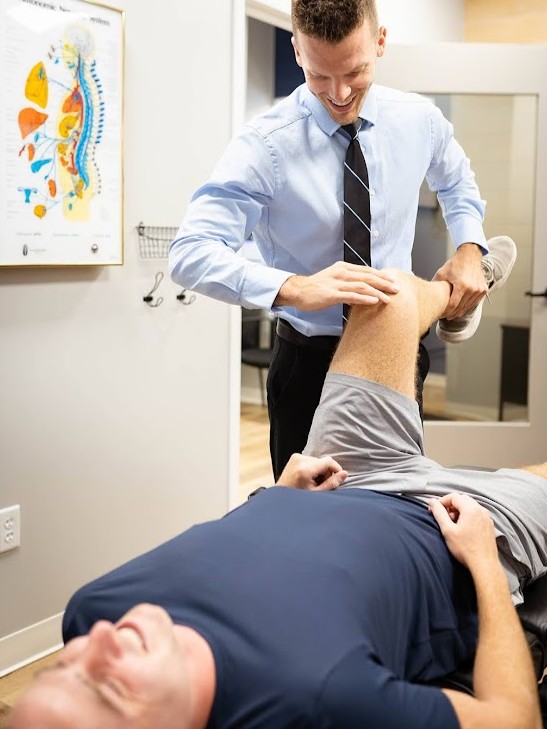
At 614 Chiropractic in Hilliard, Ohio, Dr. Nicholas Esser takes a whole-body approach to evaluating runners. An assessment typically includes looking at how the foot strikes the ground, how the hip and pelvis move, and whether there are any joint restrictions in the lower back, hip, or ankle that are shifting excess stress onto the knee. A misalignment in the hip, for example, can change the angle at which forces travel through the knee joint with every step.
Chiropractic adjustments can help restore normal joint mechanics in the knee, hip, and spine. Soft tissue techniques may be used to address tightness in the IT band, quadriceps, or calf muscles. Specific therapeutic exercises targeting hip abductor and glute strength — muscles that are often underdeveloped in runners with knee pain — are frequently incorporated into the care plan. Research suggests that combining joint mobilization with targeted exercise rehabilitation is an effective approach for managing patellofemoral pain syndrome and similar running-related conditions.
The goal at 614 Chiropractic is never to just mask the pain temporarily. Dr. Nicholas Esser works with runners to find the underlying mechanical reason the knee is being overloaded, and then address it in a way that allows you to get back to running without just pushing through an unresolved problem.
Practical Tips to Protect Your Knees
While professional evaluation is important, there are also practical steps you can take right now to reduce stress on your knees and support your recovery. These aren’t miracle fixes, but they make a real difference when applied consistently.
First, take an honest look at your training load. If you’ve recently ramped up your mileage or intensity, scaling back by 10–20% for a week or two allows tissue to recover before progressing again. Most running coaches and sports medicine professionals agree that increasing weekly mileage by no more than 10% per week is a sensible guideline for injury prevention.
Second, pay attention to your footwear. Running shoes have a limited lifespan — generally around 300 to 500 miles — and worn-out shoes lose the cushioning and support that help absorb ground reaction forces. If your shoes are looking tired, it may be time for a new pair. A specialty running store can evaluate your gait and recommend appropriate footwear for your foot type.
Third, don’t skip your hip and glute work. Weak hip abductors and external rotators are among the most consistent findings in runners with knee pain. Exercises like clamshells, single-leg bridges, and lateral band walks don’t feel glamorous, but the evidence supporting hip strengthening for runner’s knee is compelling. Dr. Nicholas Esser can provide personalized guidance on which exercises are most appropriate based on your specific movement patterns.
When to See a Chiropractor
If you’ve had knee pain that has lasted more than a week or two despite rest, it’s a good idea to get it evaluated professionally. Persistent knee pain that keeps returning when you resume running — even at lower mileage — is a sign that the underlying cause hasn’t been resolved and needs attention. Waiting too long often means a longer recovery road.
Runners in Hilliard and the greater Columbus area should consider visiting 614 Chiropractic if they notice knee pain that disrupts their normal gait, causes them to compensate with the other leg, or limits their ability to perform daily activities like climbing stairs or squatting. These are signals that the knee is under significant mechanical stress.
There are also red flag symptoms that should prompt a visit to a medical doctor or emergency care rather than waiting. These include severe swelling, the feeling that your knee is giving out or locking, significant bruising following a fall or direct impact, or pain that is rapidly worsening. These presentations may indicate structural damage to the ligaments or meniscus that goes beyond what chiropractic care alone addresses. Dr. Nicholas Esser takes a responsible approach to patient care and will always refer out when appropriate.
| Type of Knee Pain | Common Location | Likely Trigger | Conservative Care Approach |
|---|---|---|---|
| Patellofemoral Pain Syndrome | Front of knee / around kneecap | Hip weakness, overuse, mileage increase | Hip strengthening, joint mobilization, gait analysis |
| IT Band Syndrome | Outer side of knee | Tight IT band, banked roads, overtraining | Soft tissue work, stretching, hip stabilization |
| Patellar Tendinopathy | Below the kneecap | Jumping activities, overload, poor mechanics | Eccentric loading exercises, load management |
| Pes Anserine Bursitis | Inner side of knee, below joint | Overpronation, tight hamstrings | Footwear evaluation, muscle flexibility work |
Myths vs. Facts About Runner’s Knee
Myth: Running is inherently bad for your knees.
Fact: This is one of the most persistent misconceptions in the running world. Research actually suggests that recreational runners may have a lower prevalence of knee osteoarthritis compared to sedentary individuals. Running, when done with proper training progression and good mechanics, is not inherently damaging to the knee joint. Problems typically arise from overuse, poor biomechanics, or inadequate recovery — not running itself.
Myth: You just need to rest it and it will go away on its own.
Fact: While rest can reduce acute inflammation, it doesn’t address the underlying mechanical reason the knee is being overloaded. Many runners rest, feel better, return to training, and find the pain comes right back. Without identifying and correcting the root cause — whether that’s hip weakness, poor foot mechanics, or a joint restriction — the cycle tends to repeat. That’s why an evaluation with someone like Dr. Nicholas Esser can make a meaningful long-term difference.
Myth: Knee pain means you need surgery or imaging right away.
Fact: The vast majority of running-related knee pain does not require surgery or advanced imaging at the outset. Guidelines from organizations like the American College of Physicians recommend conservative care — including manual therapy, exercise rehabilitation, and activity modification — as the first line of approach for musculoskeletal pain. Imaging is typically reserved for cases where serious injury or structural damage is suspected.
Myth: Stretching alone will fix IT band syndrome.
Fact: While flexibility work has its place, IT band syndrome is more often a strength and mechanics issue than a pure flexibility problem. The IT band itself is not very stretchable tissue. Evidence indicates that strengthening the hip abductors and improving running mechanics tends to be more effective than isolated stretching for resolving this condition.
Myth: Knee pain in runners only affects older athletes.
Fact: Runner’s knee is extremely common in younger and mid-age runners, not just older adults. In fact, patellofemoral pain syndrome is one of the most frequently seen conditions in runners in their 20s and 30s. At 614 Chiropractic, Dr. Nicholas Esser sees runners of all ages dealing with knee issues — it truly doesn’t discriminate by age.
Final Thoughts From 614 Chiropractic
Knee pain doesn’t have to mean the end of your running life. Here in Hilliard and across central Ohio, there are thousands of passionate runners who have worked through similar challenges and come out stronger on the other side. Understanding the mechanics behind your knee pain — and addressing it with the right care — makes all the difference.
At 614 Chiropractic in Hilliard, Ohio, Dr. Nicholas Esser is passionate about helping runners in this community stay active, healthy, and moving well. Whether you’re a weekend warrior, a competitive racer, or someone who simply loves a morning jog through the neighborhood, your knees deserve the same attention you give to your training plan. If knee pain has been slowing you down, we’d love to be part of your recovery. Come see us — we’re your neighbors, and we’re here to help.
Frequently Asked Questions
How long does runner’s knee take to heal?
Recovery time varies depending on the severity and how long the issue has been present. Many runners see meaningful improvement within a few weeks of starting conservative care. Cases that have been ignored for months may take longer to fully resolve, which is why earlier intervention tends to lead to faster outcomes.
Can I keep running while I have knee pain?
It depends on the severity of the pain and the underlying cause. In some cases, modified running at a reduced volume and intensity is appropriate. In others, a short break is needed to allow tissue to calm down before a gradual return. Dr. Nicholas Esser can help you make that determination based on your specific situation.
Is chiropractic care safe for knee pain?
Yes, chiropractic care is a non-invasive, conservative approach that is generally considered safe for musculoskeletal knee pain. A thorough assessment is always done first to ensure that chiropractic techniques are appropriate for your condition and that nothing more serious is present.
Does running form actually matter that much?
Running form matters more than most people realize. Factors like stride length, foot strike pattern, cadence, and how your hips and torso move all influence how stress is distributed through your knees. Small, targeted adjustments to running mechanics can significantly reduce knee loading over time.
What can I do at home to help runner’s knee?
Applying ice to reduce localized inflammation, avoiding activities that provoke sharp pain, and beginning hip and glute strengthening exercises are all reasonable first steps. These should complement — not replace — a professional evaluation, especially if symptoms persist beyond a week or two.
Does 614 Chiropractic in Hilliard, OH work with runners specifically?
Absolutely. Dr. Nicholas Esser has extensive experience working with runners and active individuals throughout the Hilliard and Columbus, Ohio area. Care plans are tailored to the demands of your specific activity level and goals, with a focus on getting you back to doing what you love.
TL;DR Summary
- Runner’s knee is most commonly caused by patellofemoral pain syndrome, IT band syndrome, or patellar tendinopathy — all rooted in biomechanical imbalances and overuse.
- Ohio runners face unique risk factors including seasonal training shifts, variable terrain, and high local race participation that make knee injuries common.
- Chiropractic care from Dr. Nicholas Esser at 614 Chiropractic in Hilliard, Ohio addresses the full kinetic chain — not just the knee — to find and correct the root cause.
- Practical steps like managing training load, upgrading worn-out shoes, and strengthening the hips can significantly reduce knee pain risk.
- Most running-related knee pain responds well to conservative care. Don’t wait too long — earlier evaluation leads to faster recovery.