
If you’ve been dealing with chronic back pain, a herniated disc, or radiating leg pain that just won’t quit, you may have heard about spinal decompression therapy. Maybe your neighbor mentioned it, or you’ve been searching online trying to find a solution that doesn’t involve surgery or a lifetime of medication. Here in Hilliard, OH, many patients come through the doors of 614 Chiropractic having already tried a handful of other approaches — and they’re finally looking for something that gets to the root of the problem. That’s exactly where spinal decompression and chiropractic care come in, and more importantly, why these two approaches work so powerfully together.
Understanding why spinal decompression is often combined with chiropractic care can help you make a more confident, informed decision about your health. This article will walk you through what each approach does, why they complement each other so well, and what that kind of care actually looks like in practice.
What Is Spinal Decompression?
Spinal decompression is a non-surgical, traction-based therapy designed to gently stretch the spine and relieve pressure on compressed discs and nerves. It works by creating negative pressure within the disc space, which may help retract herniated or bulging disc material and encourage the flow of nutrients back into damaged disc tissue. It is commonly used for conditions like disc herniations, sciatica, degenerative disc disease, and spinal stenosis.
What Is Spinal Decompression Therapy?
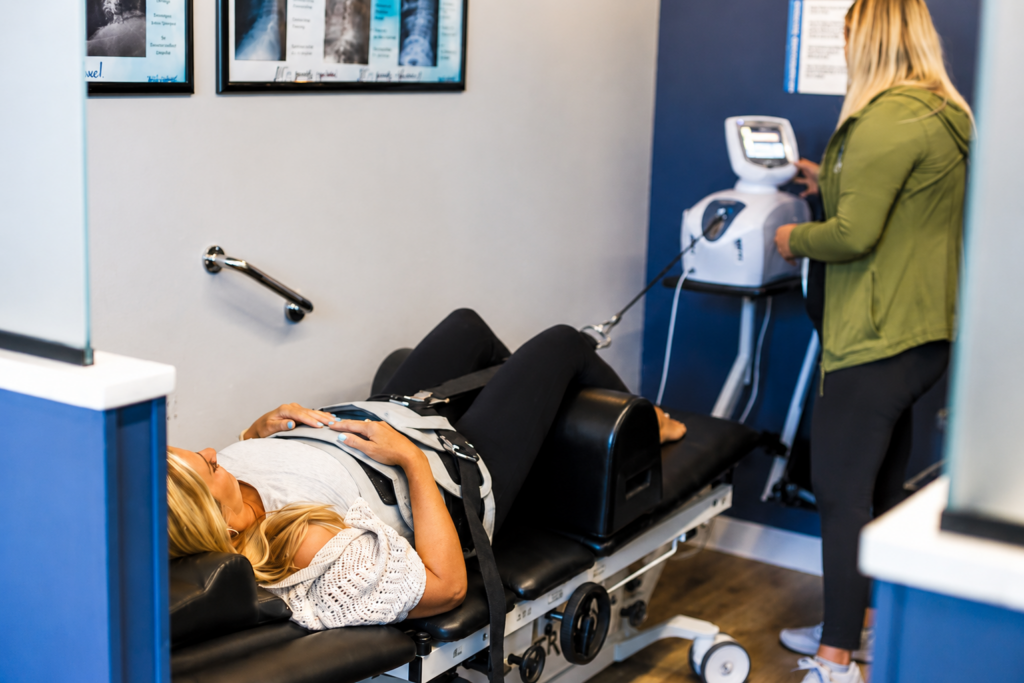
Spinal decompression therapy uses a motorized traction table to carefully and precisely stretch the spine. The goal is to reduce intradiscal pressure — the pressure inside the discs that sit between your vertebrae. When that pressure is relieved, a few important things can happen. Herniated or bulging disc material may be encouraged to retract away from the nerve it’s irritating. Nutrients, oxygen, and fluids are better able to flow back into the disc, supporting the body’s natural healing process.
There are two main types of spinal decompression. Surgical decompression, such as a discectomy or laminectomy, involves physically removing tissue to create space. Non-surgical spinal decompression — the kind used at 614 Chiropractic — is entirely different. It’s a gentle, controlled, and drug-free therapy that happens on a specialized table while you remain fully clothed and comfortable. Most sessions last around 30 to 45 minutes, and many patients actually find them relaxing.
It’s important to note that spinal decompression isn’t the right fit for every person or every condition. People with certain fractures, tumors, advanced osteoporosis, or specific surgical hardware may not be good candidates. That’s why a thorough evaluation — like the kind Dr. Nicholas Esser performs at 614 Chiropractic in Hilliard, OH — is so important before starting any spinal decompression protocol.
What Does Chiropractic Care Do?
Chiropractic care focuses on the relationship between the spine, the nervous system, and the body’s overall function. A chiropractor’s primary tool is the spinal adjustment — a precise, hands-on technique used to restore proper alignment and motion to spinal joints that are restricted or misaligned. These misalignments, often called subluxations, can contribute to pain, nerve irritation, muscle tension, and reduced mobility.
But modern chiropractic care is much broader than just adjustments. A well-rounded chiropractic visit might include soft tissue work, rehabilitative exercises, postural coaching, lifestyle recommendations, and therapeutic modalities. The underlying goal is always the same: to restore the body’s ability to function and heal as naturally as possible, without relying on drugs or surgery.
Chiropractic care is especially effective at addressing the musculoskeletal patterns that develop around a spinal problem. When you have a herniated disc or severe back pain, your body compensates. Muscles tighten up, joints get stiff, and your posture shifts in ways that can create new layers of dysfunction on top of the original issue. Chiropractic adjustments help address those compensatory patterns directly.

Why Spinal Decompression and Chiropractic Care Work So Well Together
Here’s the honest truth: spinal decompression therapy and chiropractic care each do something the other can’t fully accomplish alone. That’s the real reason why they’re so commonly combined, and why the results patients experience tend to be significantly better when both are used as part of an integrated plan.
Spinal decompression creates space. It reduces the compression on discs and nerves, allows fluids back into dehydrated disc tissue, and targets the structural root of disc-related pain. But after years of dysfunction, the muscles, joints, and nervous system patterns around that disc don’t automatically reset. That’s where chiropractic care steps in.
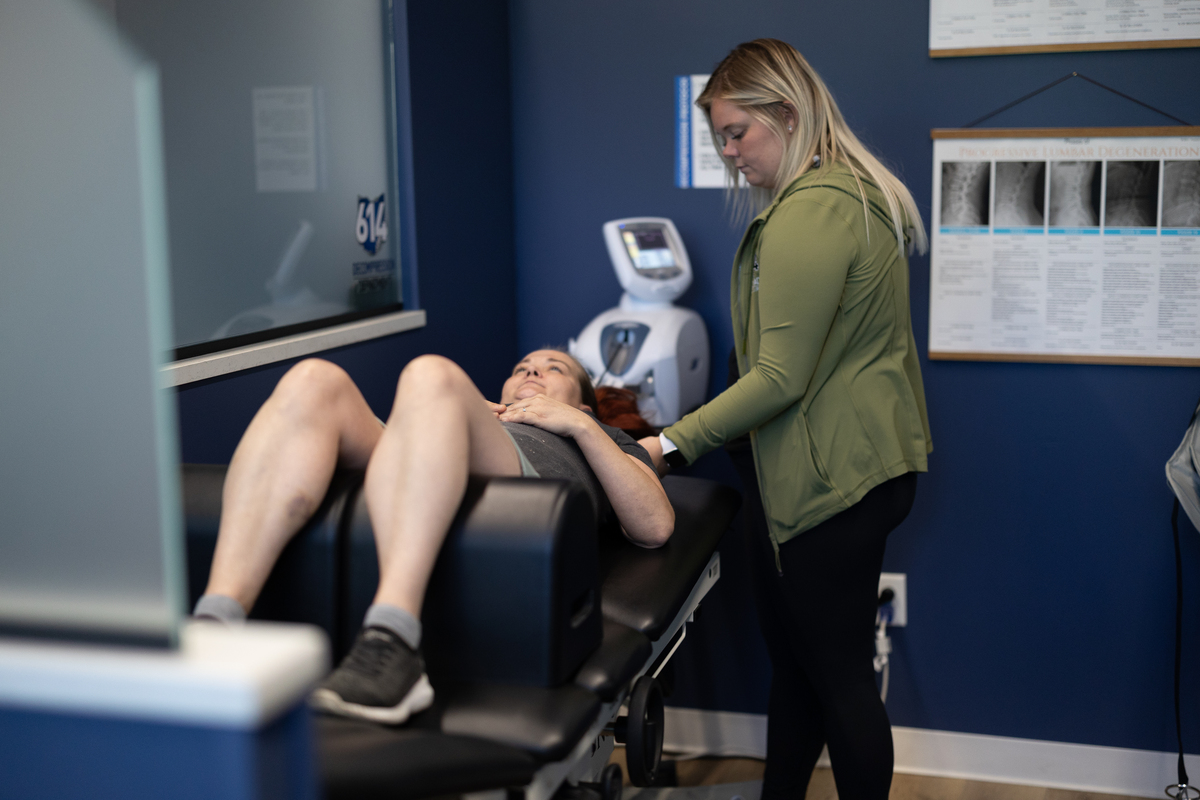
Dr. Nicholas Esser at 614 Chiropractic approaches this combination thoughtfully. Chiropractic adjustments performed alongside decompression therapy help restore proper joint mechanics in the spine, reduce surrounding muscle tension, and support better nerve function throughout the process. Think of it this way: decompression creates the right environment for healing, and chiropractic care helps the body actually use that environment effectively.
There’s also a sequencing benefit. Many practitioners find that performing a chiropractic adjustment before a decompression session helps relax the surrounding musculature, making the spine more receptive to the traction forces. After a decompression session, gentle adjustments can help maintain proper alignment while the disc tissue begins to stabilize and heal. This kind of thoughtful, sequenced care is a hallmark of the approach at 614 Chiropractic in Hilliard, OH.
Conditions That Benefit From This Combined Approach
While no treatment is right for every person, the combination of spinal decompression and chiropractic care has been shown to be particularly helpful for a range of common, painful conditions. Evidence from conservative care research suggests this kind of non-surgical approach can be meaningful for patients who haven’t found relief through medication or rest alone.
Herniated or Bulging Discs: This is one of the most common reasons patients seek out spinal decompression. When disc material pushes outward and presses on a nearby nerve, the pain can be intense and debilitating. Decompression helps reduce that pressure, while chiropractic care addresses the surrounding joint dysfunction that typically accompanies a disc injury.
Sciatica: Sciatica refers to pain, numbness, or tingling that travels from the lower back down through the buttocks and leg, usually caused by nerve compression. Whether the compression stems from a disc issue or spinal joint irritation, the combined approach targets both the structural and neurological components of sciatica effectively.
Degenerative Disc Disease: As the discs naturally lose hydration and height over time, the spaces between vertebrae narrow and nerve roots can become irritated. Regular decompression combined with chiropractic care can help manage this condition by maintaining mobility, reducing compression, and supporting the discs’ ability to rehydrate.
Spinal Stenosis: Stenosis involves a narrowing of the spinal canal, which can put pressure on the spinal cord or nerve roots. While this condition requires careful evaluation to determine appropriateness for treatment, many patients with mild to moderate stenosis respond well to non-surgical decompression paired with chiropractic care.
Facet Syndrome and Chronic Low Back Pain: Even when a disc isn’t the primary culprit, chronic low back pain often involves restricted facet joints, muscular tension, and altered movement patterns. Chiropractic adjustments are highly effective here, and decompression can provide additional relief by unloading the posterior structures of the spine.
What This Care Looks Like at 614 Chiropractic
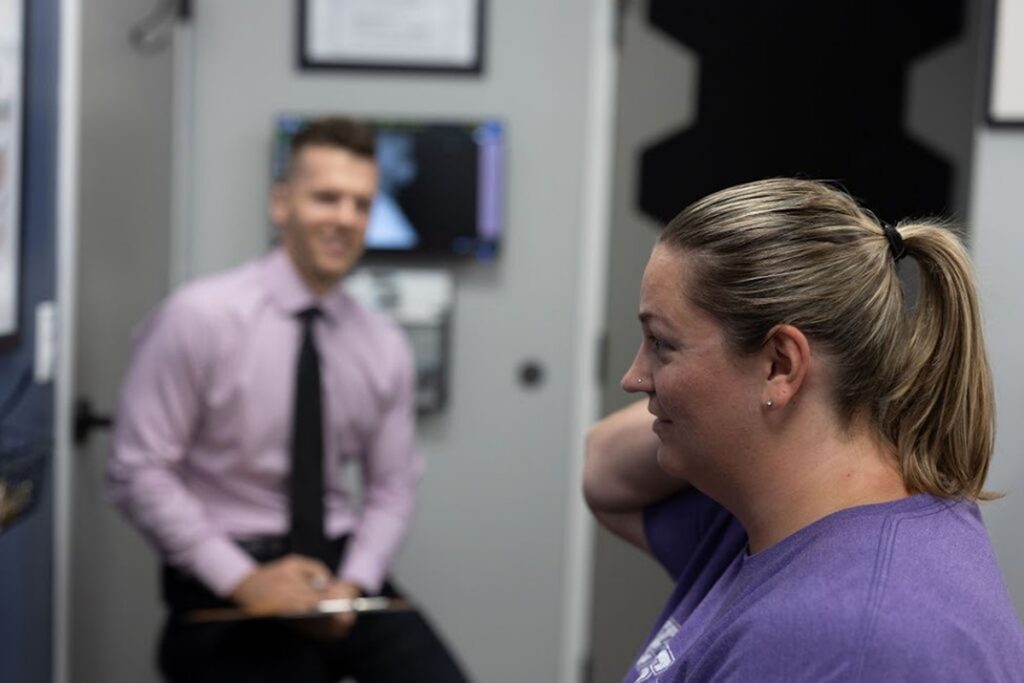
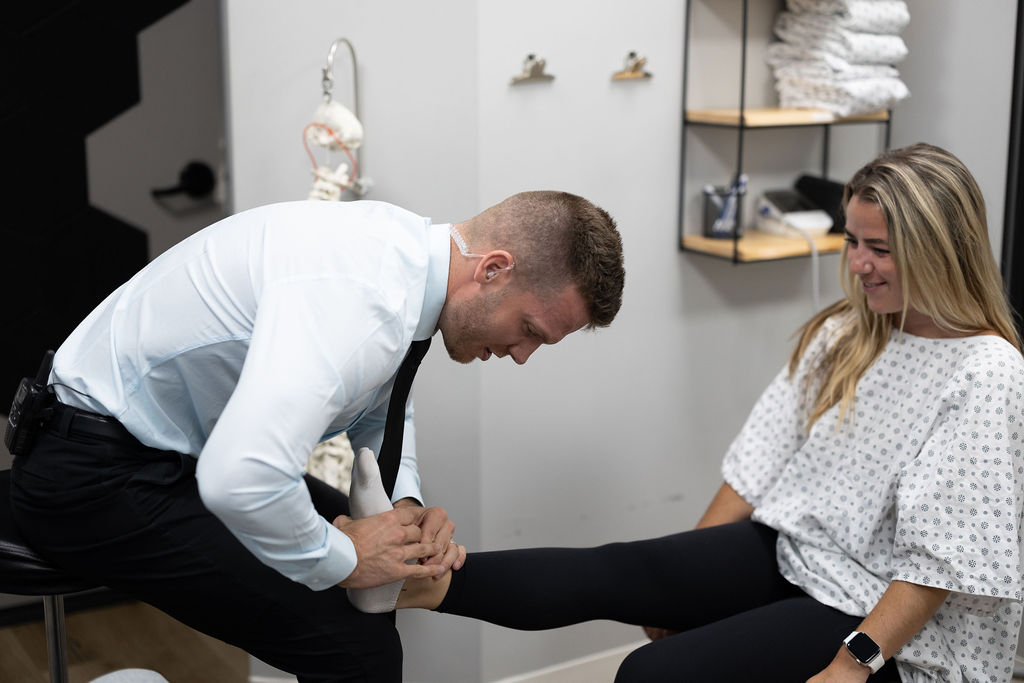
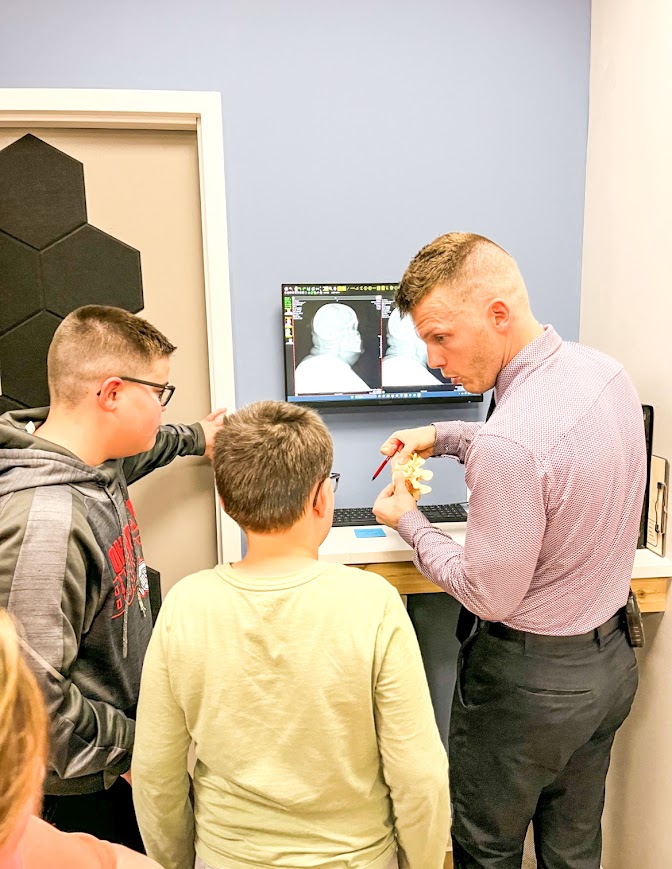
At 614 Chiropractic in Hilliard, OH, Dr. Nicholas Esser doesn’t use a one-size-fits-all approach. Every patient who comes in for spinal decompression or chiropractic care receives a thorough evaluation first. This typically includes a detailed health history, orthopedic and neurological testing, and an assessment of posture and spinal alignment. If imaging is needed, Dr. Esser will discuss that with you as well.
Once it’s clear that a patient is a good candidate for spinal decompression combined with chiropractic care, a personalized care plan is developed. Treatment protocols are adjusted based on how a patient is responding, their comfort level, and the nature of their condition. This isn’t about running everyone through the same protocol — it’s about finding what actually helps each individual person get better and stay better.
The clinic environment at 614 Chiropractic is designed to be welcoming and low-stress. Many patients here in the Hilliard community have expressed relief at finally having a conservative, non-invasive option that takes their pain seriously and addresses it from multiple angles.
Practical Tips to Support Your Recovery
Whether you’re currently undergoing spinal decompression and chiropractic care or preparing to start, there are several habits that can meaningfully support your results. These aren’t complicated — they’re small, consistent behaviors that add up over time.
Stay well-hydrated. Your spinal discs are largely made of water, and maintaining good hydration throughout the day supports the natural rehydration process that decompression therapy encourages. This is one of the simplest and most overlooked parts of disc health.
Avoid prolonged sitting during your care plan. Sitting for extended periods compresses the lumbar spine and works against the decompression your treatment is trying to achieve. If your job requires a lot of desk time, try to stand and move for at least a few minutes every hour. A standing desk or lumbar support cushion can also help.
Sleep position matters more than most people realize. Sleeping on your back with a pillow under your knees, or on your side with a pillow between your knees, helps keep the spine in a neutral position overnight. Sleeping on your stomach, on the other hand, can strain the lumbar spine and neck significantly.
Follow any home exercises or stretches recommended by Dr. Nicholas Esser. These are prescribed specifically to support your spinal stability and complement what’s being done in the office. Consistency with home exercises is one of the strongest predictors of long-term success with conservative care.
When to See a Chiropractor About Spinal Decompression
If you’ve been living with back or neck pain for more than a few weeks, especially if it radiates into your arms or legs, it’s worth getting a professional evaluation. You don’t need a referral to see a chiropractor, and most conditions can be assessed efficiently at an initial visit.
Some specific signs that the combination of spinal decompression and chiropractic care may be worth exploring include: persistent low back pain that hasn’t responded to rest or over-the-counter options, pain, numbness, or tingling that travels into the legs or feet, neck pain with symptoms that radiate into the arms or hands, or a history of diagnosed disc herniation, degenerative disc disease, or spinal stenosis.
There are also red flags that indicate a need for medical evaluation before starting any conservative care. These include loss of bladder or bowel control, severe or rapidly progressive neurological symptoms, a history of cancer or unexplained weight loss, or trauma like a car accident or fall. In these cases, seeking medical attention promptly is the right first step — and a good chiropractor will always refer out appropriately when needed.
|
Condition |
How Spinal Decompression Helps |
How Chiropractic Care Helps |
Why Both Together? |
|---|---|---|---|
|
Herniated Disc |
Reduces intradiscal pressure; may help retract disc material |
Restores joint mobility; reduces muscle tension around the injury |
Addresses both the disc and the surrounding structural dysfunction |
|
Sciatica |
Decompresses the nerve root at its source |
Corrects spinal misalignments contributing to nerve irritation |
Targets both the structural cause and nervous system involvement |
|
Degenerative Disc Disease |
Promotes disc rehydration; maintains disc height |
Maintains spinal mobility; reduces compensatory joint stress |
Slows progression and manages symptoms from multiple angles |
|
Spinal Stenosis |
Creates more space in the spinal canal |
Improves surrounding joint and muscle function |
Provides more complete decompression of neural structures |
|
Chronic Low Back Pain |
Unloads posterior spinal structures |
Addresses joint restriction, posture, and movement patterns |
Offers a more complete, multi-dimensional approach to pain relief |
Myths vs. Facts About Spinal Decompression and Chiropractic Care
Myth: Spinal decompression is just a fancy name for traction, and traction doesn’t work.
Fact: While spinal decompression does use traction principles, computerized non-surgical decompression is distinct from older, simpler traction methods. It uses precise, variable force curves that prevent the muscular guarding response that older traction often triggered. The controlled nature of modern decompression equipment makes it a fundamentally different and more targeted therapy.
Myth: You only need one or the other — decompression or chiropractic, not both.
Fact: These two therapies address different components of spinal dysfunction. Spinal decompression focuses primarily on disc-level pressure and hydration, while chiropractic adjustments restore joint alignment, mobility, and nervous system function. Using both together means you’re addressing the full picture of what’s causing your pain, which is why combined protocols often produce better outcomes than either approach used in isolation.
Myth: Spinal decompression is painful and risky.
Fact: Non-surgical spinal decompression is generally well-tolerated and considered low-risk when performed on appropriate candidates. Most patients find sessions comfortable, and some find them relaxing. The key is proper patient screening — something Dr. Nicholas Esser at 614 Chiropractic takes seriously through a thorough initial evaluation.
Myth: Chiropractic adjustments can make a herniated disc worse.
Fact: When performed by a qualified chiropractor after a proper assessment, spinal adjustments are generally considered safe for patients with disc problems. In fact, conservative chiropractic care is commonly recommended before more invasive interventions for disc-related conditions. The American College of Physicians (ACP) has included spinal manipulation among first-line recommendations for low back pain management.
Myth: If you need spinal decompression, surgery is probably inevitable anyway.
Fact: Many patients who might otherwise have been referred for surgery find significant, lasting relief through non-surgical spinal decompression combined with chiropractic care. Conservative care is widely recommended as the first course of action for most disc-related conditions, and a meaningful number of patients avoid surgery altogether through consistent, well-managed non-surgical care.
Final Thoughts From 614 Chiropractic in Hilliard, OH
Living with back pain, disc problems, or nerve-related symptoms can be exhausting — physically, emotionally, and mentally. It affects your sleep, your work, your relationships, and your ability to enjoy everyday life. The good news is that you have more options than many people realize, and surgery or long-term medication doesn’t have to be the default path forward.
At 614 Chiropractic in Hilliard, OH, Dr. Nicholas Esser is committed to helping patients in the local community find real, lasting relief through thoughtful, evidence-informed, non-surgical care. Combining spinal decompression with chiropractic adjustments allows for a more complete approach — one that addresses the underlying structural and neurological factors driving your pain, not just the symptoms on the surface.
If you’re curious whether this kind of combined care might be right for you, the best first step is simply getting evaluated. Understanding what’s actually happening in your spine gives you real information to make real decisions. That’s the kind of empowered, informed approach to health that we believe every patient in the Hilliard community deserves.
Frequently Asked Questions
How many spinal decompression sessions are typically needed?
The number of sessions varies depending on the condition being treated and how an individual responds to care. Many protocols involve a series of visits over several weeks, with progress reassessed along the way. Dr. Nicholas Esser develops personalized care plans based on each patient’s specific findings and goals.
Is non-surgical spinal decompression covered by insurance?
Coverage varies significantly by insurance plan and provider. It’s best to check directly with your insurance carrier and with the practice to understand what is and isn’t covered for your specific situation. The team at 614 Chiropractic can help guide you through that process.
Can spinal decompression help with neck pain as well as back pain?
Yes. Spinal decompression can be applied to the cervical spine (neck) as well as the lumbar spine (lower back). Conditions like cervical disc herniations or nerve compression in the neck may be addressed with cervical decompression, often combined with chiropractic care targeting the neck and upper thoracic spine.
Is it safe to get a chiropractic adjustment on the same day as a decompression session?
In many cases, yes — and many practitioners intentionally sequence them together for enhanced results. The order and combination of therapies will depend on your individual condition and what Dr. Nicholas Esser recommends following your evaluation. Every care plan is tailored to the individual patient.
What’s the difference between spinal decompression and a regular chiropractic adjustment?
A chiropractic adjustment is a precise, hands-on technique that restores motion and alignment to specific spinal joints. Spinal decompression is a table-based, motorized traction therapy designed to reduce pressure within the disc itself. They work on different targets within the spine, which is exactly why they complement each other so well.
How do I know if I’m a good candidate for spinal decompression?
Candidacy depends on your specific diagnosis, health history, and physical examination findings. A thorough chiropractic evaluation is the most reliable way to determine whether spinal decompression is appropriate for you. Certain conditions, such as advanced osteoporosis or specific types of surgical hardware, may rule out decompression therapy.
TL;DR — Key Takeaways
-
Spinal decompression therapy reduces pressure on compressed spinal discs and nerves using gentle, motorized traction — without surgery or medication.
-
Chiropractic care restores spinal joint alignment, reduces muscle tension, and supports nervous system function — addressing the structural patterns around a disc problem.
-
Combining both therapies allows for a more complete, multi-dimensional approach that targets the disc, the surrounding joints, and the body’s overall movement patterns simultaneously.
-
Common conditions that benefit from this combined approach include herniated discs, sciatica, degenerative disc disease, spinal stenosis, and chronic low back pain.
-
At 614 Chiropractic in Hilliard, OH, Dr. Nicholas Esser evaluates each patient individually to determine whether combined spinal decompression and chiropractic care is the right fit for their specific situation.